Looking for ways to improve your health and well-being following a cancer diagnosis? If so, integrative medicine may be a good way to start.
What is Integrative Medicine and how can it help individuals affected by cancer?
Integrative medicine is offered as a complementary approach to care along with or following conventional cancer treatments.
Integrative medicine offers multiple treatment approaches and strategies that are safe and effective for relieving conventional treatment side effects such as pain, fatigue, insomnia, and anxiety.
Programs and services are intended to help support individuals to achieve an optimal state of well-being before, during, and after cancer treatments.
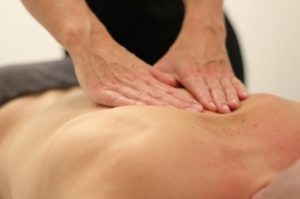
Massage relieves muscle tension and discomfort, reduces pain and swelling, and stimulates healing. It can also decrease stress, and fatigue, assist the body in achieving greater flexibility and increases circulation.
Our practitioner is a licensed massage therapist with special training in treating patients with cancer.
Some people prefer to learn in a one on one setting as opposed to being in a group. This can be true for those who are not available to meet at group class times, need an introduction to yoga, would like to tailor make a personal practice, need accountability to incorporate yoga into their regular self-care habits, or would like to learn more about yoga at their own pace.
Are you interested in channeling your passion and skill into helping someone feel better during a difficult time? We offer several training opportunities to teach yoga to cancer patients, survivors and/or caregivers.
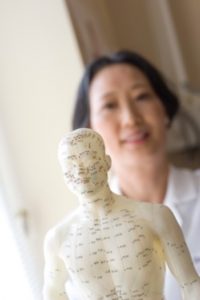
Acupuncture is being used in the care of cancer patients to help alleviate pain, fatigue, hot flashes and dry mouth after radiation as well as post-operative chemotherapy induced nausea and vomiting.
The UNC Mindfulness-based Program for Stress and Pain Management offers training in meditation and mind-body awareness that will teach you how to slow down, set priorities and stay calm, focused and relaxed in the midst of a busy life. These practices will enhance your body’s natural adaptive healing ability and will cultivate the mind’s clarity and insight.
For other UNC locations offering Integrative Medicine, such as biofeedback, massage, Tai Chi, yoga and more.
Additional Resources
Find more information about integrative medicine and complementary therapies.
American Cancer Society: Complementary and Alternative Medicine — The American Cancer Society (ACS) is a nationwide, community-based voluntary health organization. Headquartered in Atlanta, Georgia, the ACS has state divisions and more than 3,400 local offices. ACS offers general information on many cancer topics including CAM. The ACS has resources such as “Complementary and Alternative Methods for Cancer Management” and “Guidelines for using complementary and alternative medicine.”
The American Institute for Cancer Research — The American Institute for Cancer Research (AICR) is the nation’s leading charity in the field of nutrition, physical activity and weight management as it relates to cancer prevention and survivorship. This website has up-to-date information on how nutrition impacts cancer. It also provides great recipes and many free publications.
MD Anderson Cancer Center Integrative Medicine Resource Page — MD Anderson Cancer Center’s Complementary/Integrative Medicine Education Resources web site is dedicated to providing educational resources to health care professionals and patients regarding the current understanding of complementary medicine and, where appropriate, to assist in the integration ofthese medicines and therapies with conventional treatments. Their intention is to provide evidence-based information to improve the lives of patients who choose to use these therapies under the direction of informed physicians.
Memorial Sloan Kettering: About Herbs, Botanicals & Other Products — Memorial Sloan Kettering, a world renown cancer center, provides evidence-based information about herbs, botanicals, and supplements, and answers frequently asked questions which botanical products may pose a health risk; which supplements might cause dangerous interactions; and more.
National Institutes of Health: National Center for Complementary and Alternative Medicine (NCCAM) — NCCAM is the Federal Government’s lead agency for scientific research on complementary and alternative medicine. This center explores complementary and alternative healing practices in the context of rigorous science, trains complementary and alternative medicine researchers, and provides CAM information to the public as well as professionals.
National Cancer Institute: Office of Cancer Complementary and Alternative Medicine (OCCAM) — OCCAM was established in October 1998 to coordinate and enhance the activities of the National Cancer Institute (NCI) in the area of complementary and alternative medicine (CAM). OCCAM is responsible for NCI’s research agenda in complementary and alternative medicine as it relates to cancer prevention, diagnosis, treatment, and symptom management.
Natural Standard — Natural Standard was founded by clinicians and researchers to provide high quality, evidence-based information about complementary and alternative therapies. This international multidisciplinary collaboration now includes contributors from more than 100 eminent academic institutions.
NIH Office of Dietary Supplements Database — The goal of the Office of Dietary Supplements is to strengthen knowledge and understanding of dietary supplements by evaluating scientific information, stimulating and supporting research, disseminating research results, and educating the public to foster an enhanced quality of life and health for the U.S. population.
Society for Integrative Oncology — The Society for Integrative Oncology (SIO) is a non-profit, multi-disciplinary organization of professionals dedicated to studying and facilitating the cancer treatment and recovery process through the use of integrated complementary therapies. The mission of the SIO is to educate oncology professionals, patients, caregivers and relevant others about state-of-the-art integrative therapies, including their scientific validity, clinical benefits, toxicities, and limitations. SIO provides a forum for presentation, balanced discussion and peer review of evidence-based research in the discipline. The Journal of the Society for Integrative Oncology (JSIO) provides oncology professionals with need-to-know information about the data-based utility of complementary therapies.