September 5, 2023
UNC RNA Discovery Center awards inaugural fellowship grants
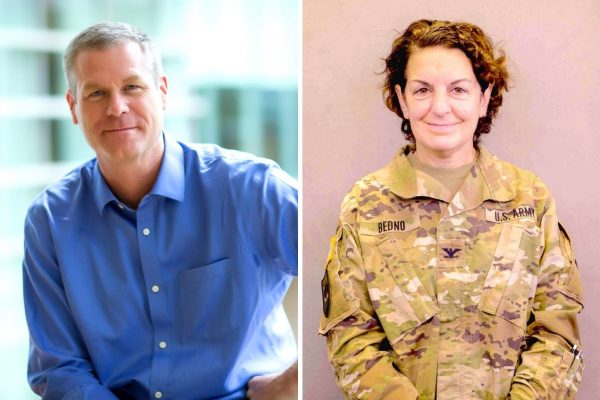
The UNC RNA Discovery Center has awarded three fellowship grants to support innovative research investigating various roles of RNA in health and disease.

September 5, 2023
The UNC RNA Discovery Center has awarded three fellowship grants to support innovative research investigating various roles of RNA in health and disease.

May 31, 2023
A study by UNC researchers has demonstrated that text messaging is an effective and well-received tool to communicate about colorectal cancer screening.

February 10, 2023
The White House Chief Science and Technology Advisor Arati Prabhakar, MS, PhD, visited Chapel Hill to discuss the fight against cancer at the UNC Lineberger Comprehensive Cancer Center.

January 25, 2023
A study led by Katherine Reeder-Hayes, MD, MBA, MS, found that Black patients and patients living in certain regions experience greater delays.

January 25, 2023
Shawn Hingtgen, PhD, and his lab team have developed a method they call a “slice platform” that may help clinicians choose the best treatment for their brain tumor patients.

October 6, 2022
UNC Lineberger researchers have found a possible way to overcome barriers that block anti-cancer immune responses. Their findings could have implications for treating solid tumors, including breast and pancreatic cancer.

September 27, 2022
Adding detection of immune cell protein SYNGR3 to current protocols could lead to a more reliable way of determining which patients with head and neck cancer need less intensive treatment.

September 13, 2022
UNC Lineberger’s Yuliya Pylayeva-Gupta, PhD, was the corresponding author of a paper published in Cell Reports Medicine that examined how B cells might be reprogrammed to improve anti-tumor immune response in pancreatic cancer. The study was led by a former research associate, Rahul Mirlekar.

August 30, 2022
UNC Lineberger awarded 17 developmental research grants totaling nearly $1.1 million to faculty during the spring 2022 award cycle.

June 5, 2022
Ethan Basch, MD, MSc, FASCO, reports that people with advanced cancer who reported their symptoms weekly using an electronic survey had better outcomes compared to those who were evaluated less frequently via in-person clinical visits.